

What Is Automobile?
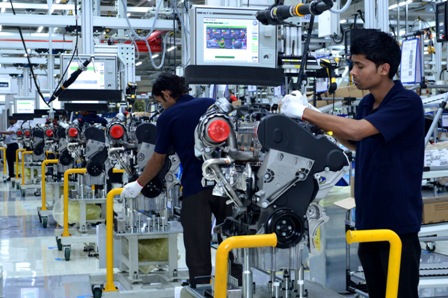
An automobile is a sophisticated combination of machines designed to generate and direct its own power to achieve controlled movement.

1. Safety Engineering: The Survival Science
Safety is the most critical benchmark. Engineers don’t just hope for the best; they use
high-powered computer simulations, such as finite element analysis, to predict how a frame will
crumple.
● The Mission: Ensuring air bags, seat belts, and structural integrity work perfectly during
front, side, or rollover impacts.
● Tools: Crash-test dummies, sled testing, and full-vehicle destruction to meet strict
government regulations.
2. Efficiency and Environment: The Green Profile
Modern engineering is defined by how little the car wastes.
● Fuel Economy: Maximizing the distance traveled per unit of energy (MPG or km/L).
● Emissions Control: Monitoring and reducing output of hydrocarbons, nitrogen oxides,
and carbon dioxide to protect air quality.
3. Performance: The Raw Metrics
Performance is the measurable “soul” of the machine. It is quantified by:
● Acceleration: How fast it hits 60 mph.
● Top Speed: The ultimate velocity limit.
● Control: Braking distance (70-0 mph), cornering grip (G-force), and stability in rain or
snow.
4. Shift Quality: The Tactile Experience
This focuses on the “feel” of the drive. It is the art of making an automatic transmission move
between gears without the driver feeling a jarring vibration or hearing an unpleasant noise. It
covers everything from a smooth park-to-reverse transition to a quick downshift for passing.
5. Drivability and Durability: The Long Game
A car must be reliable from day one to year ten.
● Drivability: Ensuring the engine starts instantly in the cold, idles smoothly, and responds
to the pedal without “stumbles” or hesitation.
● Durability: Testing the vehicle in extreme salt baths and severe road conditions to
prevent corrosion and mechanical failure over time.